



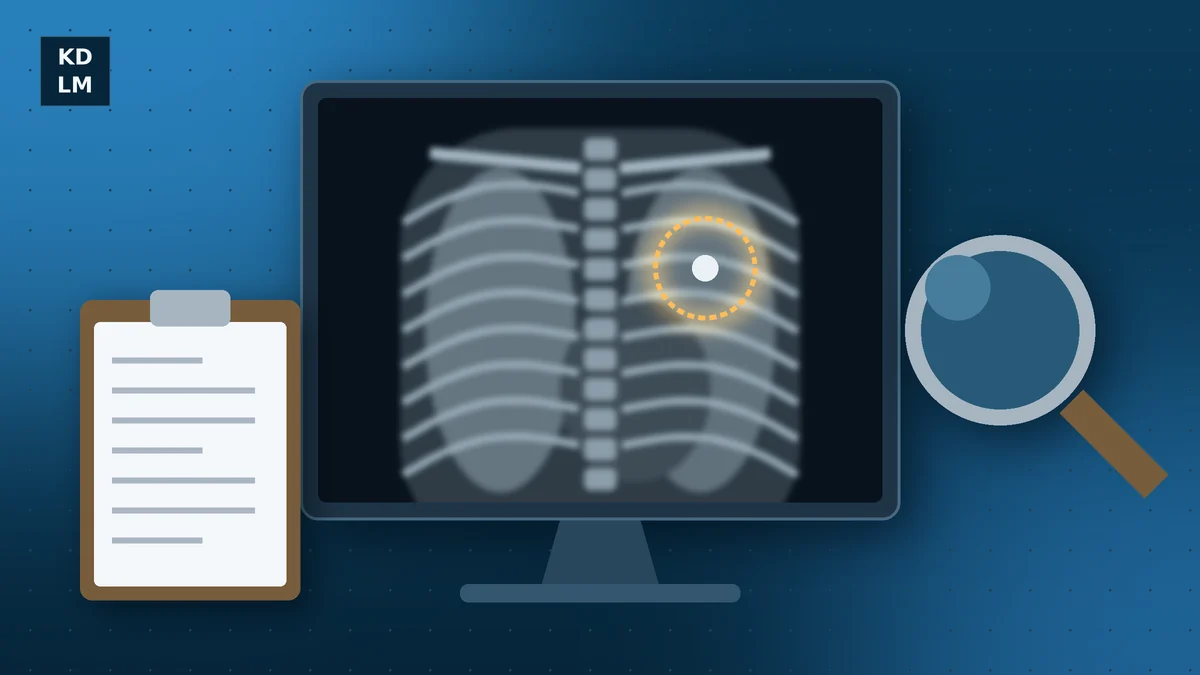
A cancer misdiagnosis settlement in New York is money paid to resolve a medical malpractice claim when a doctor, radiologist, pathologist or hospital missed or delayed a cancer diagnosis and the delay let the disease spread. There is no average or fixed formula. The value depends on how far the cancer advanced during the delay, the extra treatment it caused, and the effect on survival. Under New York’s Lavern’s Law (CPLR 214-a), you generally have 2 years and 6 months to sue from when you knew or should have known of the error and the harm, and no more than 7 years from the error itself. Public hospital and wrongful death claims have shorter deadlines.
Key takeaways
- A missed or late cancer diagnosis is malpractice only if a careful doctor would have caught it and the delay caused harm, such as a later stage, harsher treatment or lower survival.
- New York has no cap on malpractice damages. Stage shift, treatment impact, prognosis and lost income drive value.
- Lavern’s Law (CPLR 214-a, 2018) allows 2 years and 6 months from discovery of a missed cancer, with a 7-year outer limit. The continuous-treatment rule can also apply.
- Shorter New York deadlines: a 90-day notice of claim and 1 year and 90 days to sue a public hospital such as NYC Health + Hospitals, and 2 years from death for wrongful death.
- Before filing, a lawyer must consult a physician and file a certificate of merit with the complaint (CPLR 3012-a).
- New Jersey, Pennsylvania, and Connecticut have different rules. See the state-by-state section below.
- KDLM obtained $3.8 million for a 44-year-old Suffolk County woman after a two-year delay in diagnosing breast cancer. Past results do not guarantee a similar outcome.
This guide explains how a claim works for New Yorkers, what affects settlement value, and the deadlines that matter. It was prepared by Kramer, Dillof, Livingston & Moore (KDLM), a Manhattan personal injury and medical malpractice law firm. It is general information to help patients and their families understand their legal options, not legal advice about a specific case.
Can a cancer misdiagnosis be medical malpractice in New York?
Yes. A missed or late diagnosis is malpractice when a medical provider fell below the accepted standard of care and that negligence caused real harm, such as a later stage at diagnosis, harsher treatment or a shorter life expectancy. Not every medical error is malpractice; it has to be one a careful doctor would not have made.
In every malpractice case, New York asks four questions before a plaintiff can recover:
- Duty: was there a doctor-patient relationship?
- Departure: would a careful doctor in the same specialty have ordered the test, read the scan correctly, or followed up on the abnormal result?
- Causation: did the delay in diagnosis let the disease progress, for example from a localized tumor to one that spread to lymph nodes?
- Damages: what did that progression cost you, medically, financially, and personally?
Before you can file a lawsuit, New York medical malpractice law requires a lawyer to consult a qualified physician and certify that the case has merit (CPLR 3012-a). In practice, these cases are built on medical records, imaging, pathology slides, and testimony from a medical expert in oncology, radiology, or pathology.
The outcome: a wrong diagnosis alone is not a basis for a malpractice claim. The question is whether a careful provider would have caught the problem sooner, and whether that would have changed what happened to you.
How often do doctors misdiagnose cancer?
More often than most people expect. Malignancy is one of the main sources of serious harm from diagnostic error in the United States health care system.
A 2024 Johns Hopkins-led study in BMJ Quality & Safety, led by Dr. David Newman-Toker, estimated that about 795,000 Americans die or are permanently disabled each year because of diagnostic error. Vascular events, infections and cancers accounted for about 75% of those serious harms, and lung tumors were among the top five conditions behind them (Newman-Toker et al., BMJ Quality & Safety, 2024;33:109-120, published online July 2023).
Many types of cancer are missed in similar ways, including:
- Lung cancer: a nodule on a chest X-ray or CT that is never followed up, a classic missed cancer diagnosis.
- Breast cancer: a breast cancer screening mammogram or ultrasound read as normal, or a lump that is not biopsied.
- Colon and rectal tumors: rectal bleeding or anemia blamed on hemorrhoids without a colonoscopy.
- Cervical cancer: an abnormal Pap or HPV result that is never followed up.
- Prostate cancer: a rising PSA that is not referred to a urologist.
- Melanoma: a changing mole dismissed, or a biopsy that pathology misreads.
Most of these missed diagnoses involve common diseases where a test result, referral, or follow-up call fell through the cracks, and the patient ended up with advanced cancer that was harder to treat.
What is the average payout for cancer misdiagnosis?
There is no reliable “average payout,” and you should read any website that quotes one with caution. Settlements range widely because every cancer misdiagnosis claim turns on its own medical facts.
New York does not cap malpractice damages, so value is driven by the evidence, not a statutory limit. The factors that matter most are:
- Stage shift: how far the tumor advanced between when it should have been found and when it was found.
- Treatment impact: whether the delay meant chemotherapy, radiation or more extensive surgery that earlier cancer treatment would have avoided.
- Prognosis: how survival odds change as the cancer progresses, supported by oncology experts and published data.
- Economic losses: medical bills, lost wages and future care costs.
- Who is responsible: a hospital, radiology group or private practice, and their insurance coverage.
- Venue: where the case is filed, such as New York County (Manhattan) or the Bronx.
One example: KDLM obtained $3.8 million for a 44-year-old Suffolk County woman after a two-year delay in diagnosing breast cancer. Past results do not guarantee a similar outcome. An honest evaluation starts with an expert review of your records, not a number from the internet.
How much compensation can a medical malpractice claim recover for a missed or delayed diagnosis?
Compensation can cover both financial losses and personal losses caused by the delay.
- Economic damages: past and future medical expenses, lost earnings, and the cost of care or help at home.
- Non-economic damages: pain and suffering, reduced quality of life, and the emotional toll of a worse prognosis.
- Wrongful death damages: if a patient dies, the estate’s personal representative may bring a claim for the family’s financial losses caused by the death, plus a claim for the patient’s own conscious pain and suffering.
New York’s wrongful death law still limits the family’s recovery to financial (“pecuniary”) losses (EPTL 5-4.3). As of October 2026, the proposed Grieving Families Act, which would add damages for grief and loss of companionship, has not become law. Governor Hochul vetoed the version the Legislature passed in 2025 on December 5, 2025, her fourth veto of the bill, and the 2026 version did not reach a floor vote before the Legislature adjourned in June 2026.
When a large verdict includes future damages, New York’s periodic payment rules (CPLR Article 50-A) can affect how part of the money is paid.
What is the statute of limitations for a cancer misdiagnosis case in New York?
For most missed tumor cases, you have two and a half years from when you knew, or reasonably should have known, about the error and the harm it caused, but that discovery period can’t run past 7 years from the error itself. If you kept treating with the same provider for the same condition, the two and a half years can instead run from the last treatment, whichever is later.
That discovery rule comes from Lavern’s Law, which amended section 214-a of the Civil Practice Law and Rules (CPLR 214-a) in 2018 for a negligent failure to diagnose cancer or a malignant tumor. It is named for Lavern Wilkinson, a Brooklyn mother whose lung tumor was missed on an X-ray and who learned of the error after the old deadline had passed. We explain the law in detail in our guide to Lavern’s Law and NYC misdiagnosis claims.
Shorter deadlines can apply. To file a claim against a public hospital, such as an NYC Health + Hospitals facility, you generally must serve a notice of claim within 90 days and start the lawsuit within 1 year and 90 days. If the patient has died, a wrongful death action generally must be filed within 2 years of death. See our overview of deadlines for malpractice claims in New York for the full picture.
The practical outcome: do not wait to see how treatment goes before you speak with a lawyer. Records take time to gather, and a missed deadline usually ends the case.
What are the deadlines and rules in NY, NJ, PA and CT?
A missed cancer case can involve care in more than one state, and the filing deadline depends on where the care happened. KDLM handles cases in New York, New Jersey, Pennsylvania, and Connecticut, and each state sets its own deadlines and filing rules. This is a general summary of the law as of October 22, 2026, not legal advice. Exceptions can shorten or extend these periods, so have a lawyer confirm the dates for your case.
New York
- Deadline: 2 years and 6 months from the malpractice, or from the last treatment if you kept treating with the same provider for the same condition (CPLR 214-a). Missed cancer: 2 years and 6 months from when you knew or should have known of the error and the harm, but no more than 7 years from the error (Lavern’s Law). Foreign object left in the body: 1 year from discovery.
- Children: the clock is paused until age 18, but a malpractice claim can’t be extended more than 10 years past the malpractice (CPLR 208).
- Merit rule: the lawyer files a certificate of merit with the complaint after consulting a physician (CPLR 3012-a).
- Wrongful death: 2 years from death (EPTL 5-4.1); damages are limited to financial losses (EPTL 5-4.3).
- Damages and fault: no cap on malpractice damages. A patient’s own share of fault reduces the award but doesn’t bar it (CPLR 1411).
- Public hospitals: notice of claim generally within 90 days, and suit within 1 year and 90 days (General Municipal Law 50-e and 50-i; NYC Health + Hospitals).
New Jersey
- Deadline: 2 years (N.J.S.A. 2A:14-2). Courts apply a discovery rule, so the clock can start when you knew or should have known of the injury and its likely cause.
- Children: injuries at birth must be filed before the child’s 13th birthday (N.J.S.A. 2A:14-2). For other injuries, the clock is generally paused until age 18 (N.J.S.A. 2A:14-21).
- Merit rule: an affidavit of merit from an appropriate licensed professional is due within 60 days after the defendant answers. A court can allow one extra period of up to 60 days (N.J.S.A. 2A:53A-27).
- Wrongful death: 2 years from death (N.J.S.A. 2A:31-3).
- Damages and fault: no general cap, but a nonprofit hospital’s liability is capped at $250,000 (N.J.S.A. 2A:53A-8). A patient whose fault is greater than the defendants’ recovers nothing (N.J.S.A. 2A:15-5.1).
- Public hospitals: Tort Claims Act notice within 90 days. Suit can be filed after 6 months and within 2 years (N.J.S.A. 59:8-8).
Pennsylvania
- Deadline: 2 years (42 Pa.C.S. 5524), with a court-made discovery rule. The 7-year outer limit in the MCARE Act was struck down by the Pennsylvania Supreme Court in Yanakos v. UPMC (2019).
- Children: the clock is paused until age 18, and then the normal 2 years runs (42 Pa.C.S. 5533(b)).
- Merit rule: a certificate of merit for each licensed professional is filed with the complaint or within 60 days after it (Pa.R.C.P. 1042.3).
- Wrongful death: wrongful death and survival claims based on malpractice must be filed within 2 years of death, unless the cause of death was misrepresented or concealed (40 P.S. 1303.513(d)).
- Damages and fault: no cap on compensatory damages. Punitive damages against an individual doctor are generally limited to 200% of compensatory damages (40 P.S. 1303.505). A patient whose fault is greater than the defendant’s recovers nothing (42 Pa.C.S. 7102).
- Public hospitals: written notice to the government unit within 6 months (42 Pa.C.S. 5522). Damages against Commonwealth parties are capped at $250,000 per plaintiff (42 Pa.C.S. 8528), and against local agencies at $500,000 in total (42 Pa.C.S. 8553).
Connecticut
- Deadline: 2 years from when the injury was sustained or discovered (or should have been), and never more than 3 years from the act or omission (C.G.S. 52-584). Continuing-treatment and continuing-conduct doctrines can pause the clock. An automatic 90-day extension is available by petition (C.G.S. 52-190a(b)).
- Children: the malpractice statute has no general extension for minors, so the same limits usually apply to a child’s claim.
- Merit rule: the complaint must include a good-faith certificate and a written, signed opinion from a similar health care provider. Without the opinion letter, the case can be dismissed (C.G.S. 52-190a).
- Wrongful death: 2 years from death, and no more than 5 years from the act or omission (C.G.S. 52-555).
- Damages and fault: no cap on malpractice damages. A patient whose fault is greater than the defendants’ combined fault recovers nothing (C.G.S. 52-572h).
- State hospitals: claims against the state generally have to be presented within 1 year, and never more than 3 years from the act (C.G.S. 4-148). A malpractice suit can be filed directly within that period with a good-faith certificate (C.G.S. 4-160(f)).
The outcome: if your care happened outside New York, the deadline may be shorter, and the merit paperwork is different. Ask early so nothing is missed.
How does a cancer misdiagnosis lawsuit in Manhattan work?
A Manhattan case is usually filed in New York State Supreme Court, New York County, and the litigation moves through a set series of steps.
- Records and imaging: we collect medical records, imaging studies and pathology slides from every provider.
- Expert review: independent specialists review whether the care was reasonable and how the delay changed the course of the disease.
- Filing: your attorney files the complaint with a certificate of merit.
- Discovery: both sides exchange records and take depositions of the doctors involved.
- Settlement or trial: many cases settle, often after expert discovery or during mediation; others go to a jury.
The same process applies to patients across New York State. A case can take a few years, and many types of medical malpractice follow this path.
Why choose a New York cancer misdiagnosis lawyer at our law firm?
Misdiagnosis attorneys who try cases, not just settle them, give you leverage when an insurer decides what a medical misdiagnosis claim is worth.
KDLM’s personal injury lawyers and malpractice attorneys have represented injured people for decades. The firm reports more than 150 verdicts over $1 million and settlements in excess of $3 billion. Partner Judith Livingston has served on the board of directors of Judges and Lawyers Breast Cancer Alert, a New York organization that promotes awareness and early detection. You can also read a recap of some of our missed diagnosis cases.
KDLM handles medical malpractice cases on a contingency fee basis: no fee unless we win. Past results do not guarantee a similar outcome. If you think your diagnosis was missed or delayed, learn more about how a failure to diagnose lawsuit works.
Related: missed stroke cases | missed aneurysm cases
Frequently asked questions
Can you sue a doctor for misdiagnosis of cancer in New York?
Yes, if the doctor departed from the accepted standard of care and the delay caused harm, such as a later stage or more aggressive treatment. New York requires a lawyer to consult a physician and certify the claim has merit before filing (CPLR 3012-a). A KDLM attorney can review your records and tell you whether the facts support a claim.
What is the average misdiagnosis settlement in New York?
There is no reliable average. Value depends on how far the disease progressed during the delay, the treatment it required, the effect on survival, and economic losses. New York has no damages cap, so the evidence drives each case.
How often are cancer diagnoses missed?
It is a leading source of diagnostic harm. A 2024 Johns Hopkins-led study in BMJ Quality and Safety found that vascular events, infections and cancers account for about 75% of serious harms from diagnostic error in the US, with lung tumors among the top five conditions.
Does Lavern’s Law apply to a delayed cancer diagnosis?
Lavern’s Law applies when a doctor negligently misses cancer or a malignant tumor. It generally allows 2 years and 6 months from when you knew or should have known of the error and harm, with a 7-year outer limit. Public hospital and wrongful death claims have shorter deadlines.
Do I pay anything up front to hire a cancer misdiagnosis attorney at KDLM?
No. KDLM handles these cases on a contingency fee: no fee unless we win. The fee is a percentage of any recovery, and under New York law, it is limited by a sliding scale for these fees (Judiciary Law 474-a).
How long does a cancer misdiagnosis lawsuit take in New York?
Many cases take a few years. Gathering records and expert review comes first, then filing with a certificate of merit, discovery and depositions, and finally settlement or trial. Many cases settle after expert discovery or at mediation; others go to a jury.
Does the deadline differ outside New York?
Yes. New Jersey and Pennsylvania generally allow 2 years, and their courts apply a discovery rule. Connecticut allows 2 years from when the injury was or should have been discovered, but no more than 3 years from the error. Each state also has its own merit filing: a New Jersey affidavit of merit, a Pennsylvania certificate of merit, or a Connecticut opinion letter. Wrongful death deadlines and public-hospital notice rules also differ. KDLM handles cases in all four states, so contact us early to have your dates checked.
Get a free consultation with a New York medical malpractice lawyer
Call (212) 618-6800 to speak with KDLM about your records and deadlines. The consultation is free and confidential.